Edward Hopper and Solitude
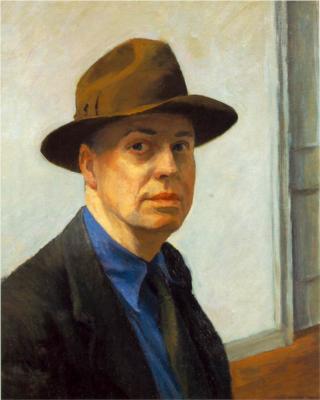
Recently, I have been thinking a lot about emotions and our innate ability to associate certain feelings with good and others with bad. Often we hear that life is good as long as you are happy. Or when we are little, we have listened to our loved ones say don't be sad things will be ok. While I don't nessicary believe these phrases are wrong, I think we should question our intuition to associate certain emotions one way or another. Furthermore, I believe the direct actions of their context should only judge feelings. Take, for example, happiness. Generally speaking, we are conditioned to see happiness as the best of the good emotions; however, usually speaking, sometimes when we are happy, it's for the wrong reason, like when a person we dislike is hurt by something generally, we are delighted by this misfortune. Is this good?
The point I'm getting at with this concept is that I have had many emotions that I would use to see as bad before coming to college and now see as delightful feelings. Before college, I never felt alone. Family, friends, teachers, co-workers, and teammates always surrounded me. However, coming to college and knowing a few people surrounding me has dramatically increased my time alone. At first, I saw this as a negative; however, over time, I found my best work was done without others clouding my judgment. Still, while I see solitude as a good productive feeling, it feels weird when others pity this feeling.
I find my fixation on solitude peculiar because often, the moments that bring me the most joy in life are those moments anchored around friends and loved ones. If I had to guess, my reasoning for loving this time is that I find solitude so appealing because I'm solely focused on myself during this time. There is something beautiful about a human's desire to improve. As media consumers, we are fixated on underdog stories of zeros becoming heroes through personal sacrifice and growth. The idea that we, too, can become a legend is planted inside us when our parents say we can do anything when we grow up.
While many environments can lead to personal growth, solitude has always had sadness because of its isolated nature. Everyone who has seen an older person eating alone at a restaurant has had their heartstrings pulled in their realization that person is alone. However, to a person like me, who can fill an entire hour exploring the bounds of their mind, I find solitude a time of self-development and contemplation.
The outstanding still-life french artist Paul Cezanne said, "A work of art which did not begin in emotion is not art." This quote is what I believe to be the bases behind the realist painter Edward Hopper.
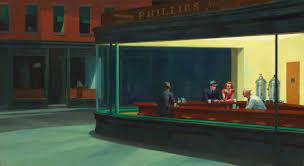
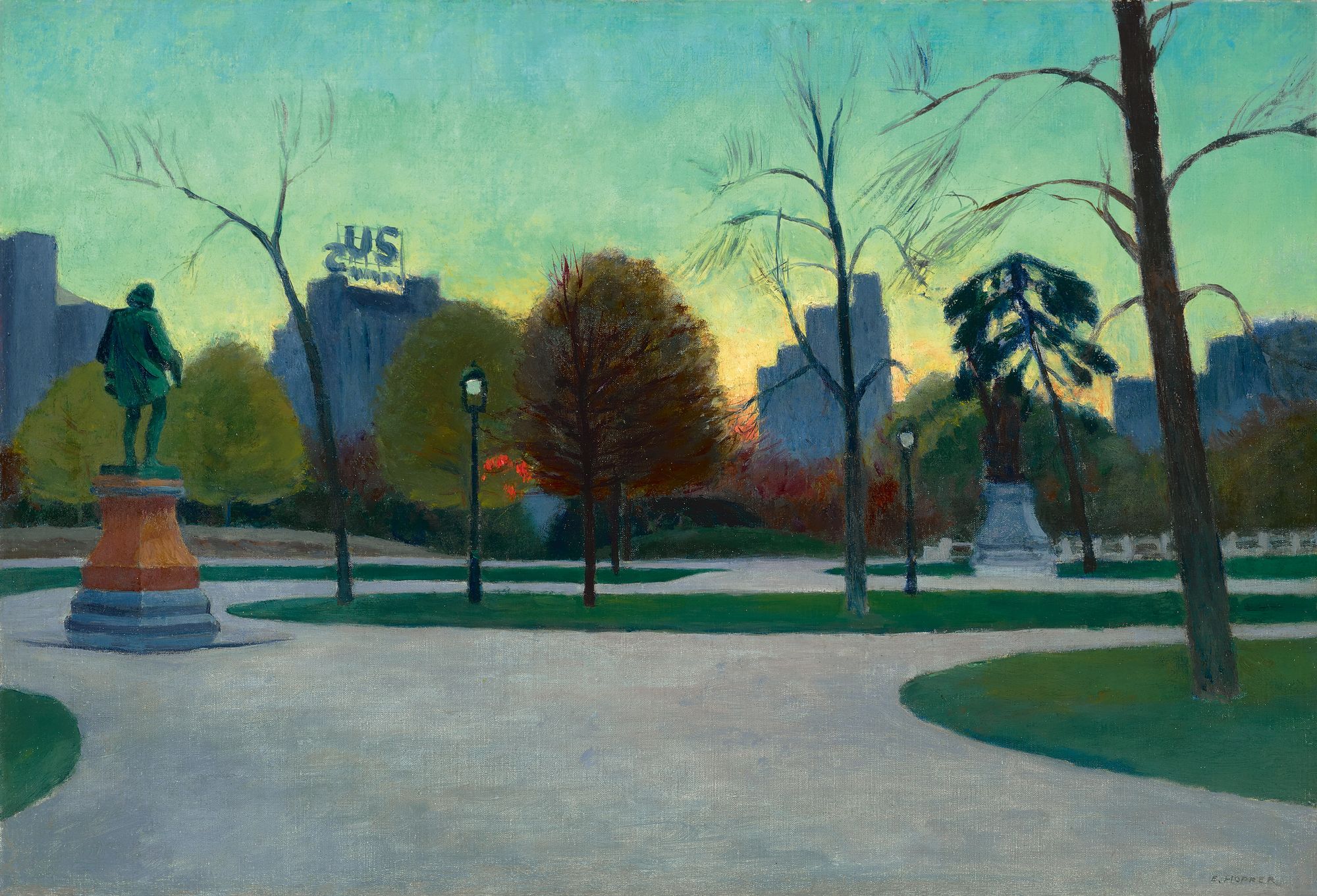
A quick look at any of Hopper's paints shows an immediate tone of isolation. This is followed by our eyes darting across the paintings, trying to find any source of movement or life than the world Hopper presents. I find Hopper's Central Park the most peculiar of his paintings because there is no source of life. We know life must exist for humanity's footprint to be everywhere to be seen. Whether it is the concrete pathways, high-rise buildings are peaking into the park, or the statute gazing over his domain. Furthermore, why would a realist painter paint no living sole in a park known for its dynamic nature?
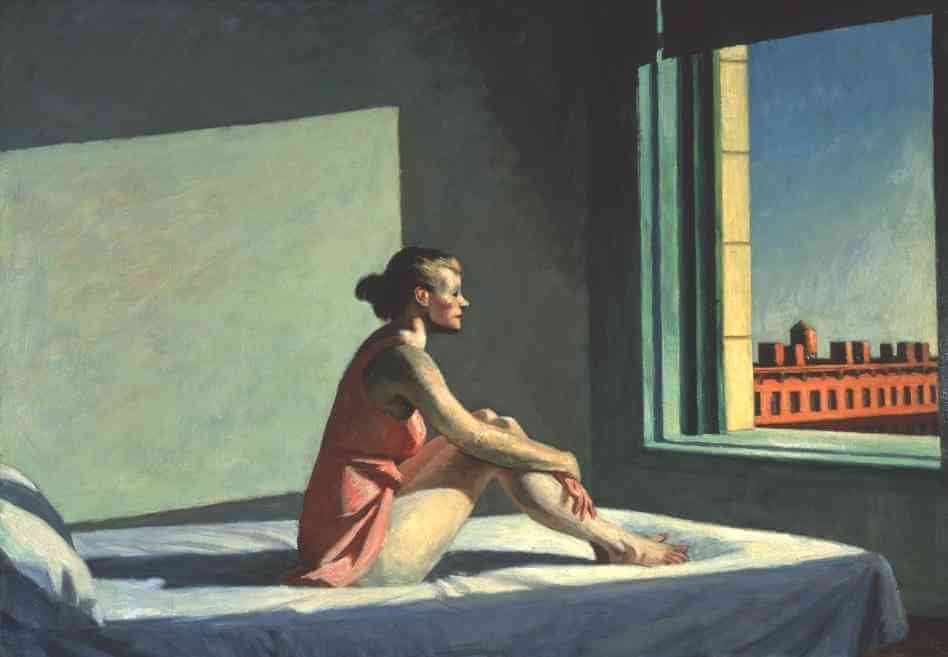
His paintings scream solitude, but even when his paints of single subjects produce a look of sadness; I cannot help but feel content when looking at them. Indeed, he meant to make these paintings emote feelings of sadness or at least similar emotions. But as I look longer at them, I see life and the very nature of living, which in my mind is beautiful. So often, we look at people and feel we can make the best judgment of their feelings based on their facial expressions, and while this is true with many faces, the face of contemplation has no evidence of emotion, for all surfaces are stored inside the head. It is as if contemplation is the brain's way of showing its poker face. Take, for example, Hopper's painting Morning Sun. In the painting, the woman looks sad and lonely at first glance. Furthermore, the calm nature of the plain room around her enhances her loneliness. However, I would argue that she isn't sad or lonely but instead reflecting on the day ahead.
If Hopper wanted to paint sadness, he wouldn't have painted the woman glaring at the sunrise. Sunrises symbolize new starts and the bringer of warmth, whereas the cold nighttime brings feelings of suffering, such as sadness, and if we have no others to share the warmth with, feelings of isolation. So if the woman were sad, she would have been present in a darker environment, such as the blinds being closed, to symbolize acceptance of sadness or to show her current state of dark isolation. However, she embraced the sun, which nicely greeted her in the morning. She takes this greeting as an opportunity to think which often doesn't allow for facial reading. Lastly, Hopper himself is quoted as saying, "No amount of skillful invention can replace the essential element of imagination." These quotes help explain Hopper's reasoning for painting isolated figures. When two figures are painted together, we often can assume that their facial features and emotions are based on the other figure's actions. However, in an isolated setting with one figure, we aren't given many context clues as to why they show certain emotions. It is often the case then the emotion isn't from an outside source but rather from the inner dialogue between body and mind.
The beauty of solitude doesn't come from the physical world. Instead, it comes from the spontaneity of the mind. Thinking allows emotions to process and form into thoughts that become actions. Emotions can't be processed the same way metal is turned in cars. There is no assembly line able to turn thoughts into emotions or emotions into thoughts. There is not one piece of art, product, or lifestyle that wasn't created through inner thinking. Whether your internal reflection is best practiced in a communal setting or in solidarity, the fact of the matter is that your personal preference should trump our intuition on social standards.